
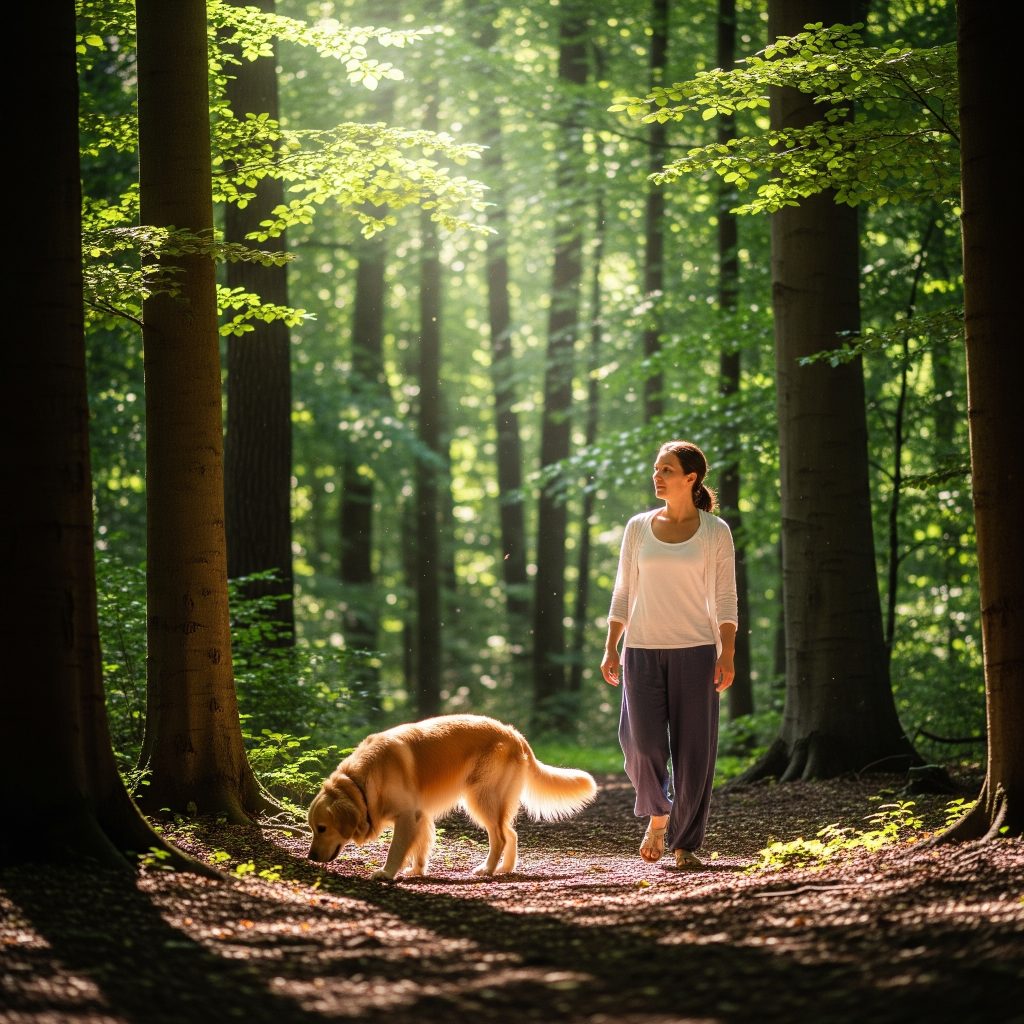
Introduction Forest bathing, or Shinrin-yoku, is a practice that involves immersing oneself in a forest environment to relax and soak in the natural atmosphere. Originally developed in Japan, this practice offers numerous benefits for both humans and their canine companions.
What is Forest Bathing? Forest bathing involves spending time in nature to build awareness and a strong connection with the environment. By engaging all your senses, it promotes relaxation, healing, and overall well-being.
Benefits of Forest Bathing for Dogs
- Immune System Boost:
- Phytoncides: Trees and plants release phytoncides, natural chemicals that protect them from insects and decay. These chemicals also have beneficial effects on humans and animals.
- Natural Killer (NK) Cells: Phytoncides can enhance the activity of NK cells, which play a role in immune defense. For dogs, exposure to these chemicals can help strengthen their immune system, making them more resilient to illnesses.
- Mood Enhancement: Inhaling phytoncides is linked to reduced stress and improved mood. This can lead to a happier and more balanced emotional state for your dog, contributing to their overall well-being.
- Stress Reduction: The calming environment of the forest helps lower cortisol levels in dogs, reducing stress and anxiety. The natural setting promotes relaxation, which can be particularly beneficial for dogs that are easily stressed or anxious.
- Mental Stimulation: Forests provide a rich tapestry of scents, sounds, and sights that stimulate a dog’s senses. This sensory engagement keeps their mind active and prevents boredom, which is crucial for their cognitive health.
- Physical Health: Relaxing walks in the forest are a form of low-impact exercise that supports cardiovascular health and joint mobility. This is especially beneficial for older dogs or those with joint issues, providing them with a safe way to stay active.
- Connection with Nature: Forest bathing allows dogs to connect with their natural instincts and environment. This connection can lead to a more grounded and contented pet, as they engage with the world in a way that is instinctive and fulfilling.
- Variety in Routine: Incorporating forest bathing into your dog’s routine adds variety and excitement, preventing monotony and keeping their daily life interesting and engaging.
Origin and Global Spread of Forest Bathing Forest bathing, or Shinrin-yoku, originated in Japan in the early 1980s. The term “Shinrin-yoku” translates to “forest bath” in English and was introduced by the Japanese Ministry of Agriculture, Forestry, and Fisheries. The practice was developed as a form of eco-therapy to encourage people to reconnect with nature and improve their mental and physical well-being.
The concept of forest bathing is rooted in ancient Japanese Shinto and Buddhist traditions, which emphasize the spiritual and healing properties of nature. However, it was formalized as a therapeutic practice in response to the increasing urbanization and technological advancement that led to a more disconnected lifestyle from nature.
Over the years, scientific research has supported the benefits of forest bathing, highlighting its positive effects on reducing stress, enhancing mood, boosting the immune system, and promoting overall health. This has led to the global spread of forest bathing as a wellness practice, with many countries adopting it as a way to improve public health and encourage environmental conservation.
Today, forest bathing is recognized worldwide as a simple yet powerful way to enhance well-being by immersing oneself in the natural environment, engaging all the senses, and fostering a deeper connection with the natural world.
FAQs
- FAQ 1: What is forest bathing and how does it benefit my dog? Forest bathing, or Shinrin-yoku, involves immersing oneself in a forest environment to relax and engage with nature through all senses. For dogs, it promotes relaxation, reduces stress, and enhances their overall well-being by encouraging mindfulness and a deep connection with the natural world.
- FAQ 2: How does forest bathing help reduce stress in dogs? The calming environment of the forest helps lower cortisol levels in dogs, reducing stress and anxiety. This natural setting promotes relaxation, making it particularly beneficial for dogs that are easily stressed or anxious.
- FAQ 3: What are phytoncides and how do they boost my dog’s immune system? Phytoncides are natural chemicals released by trees and plants that protect them from insects and decay. These chemicals enhance the activity of Natural Killer (NK) cells, which play a role in immune defense. For dogs, exposure to phytoncides can strengthen their immune system, making them more resilient to illnesses.
- FAQ 4: How can forest bathing improve my dog’s mental and physical health? Forests provide a rich sensory environment that stimulates a dog’s senses, keeping their mind active and preventing boredom. Gentle walks in the forest offer low-impact exercise that supports cardiovascular health and joint mobility, especially beneficial for older dogs or those with joint issues.
- FAQ 5: How can I incorporate forest bathing into my routine with my dog? Aim to incorporate forest bathing regularly, weekly or as much as possible to maximize the benefits for both you and your dog.
Further Reading: Explore Forest Bathing Research For those interested in delving deeper into the scientific studies on forest bathing, the PubMed database offers a wealth of resources. By visiting PubMed’s Forest Bathing Search, you can access a comprehensive collection of peer-reviewed articles and research papers. This resource provides valuable insights into the health benefits, psychological effects, and various dimensions of forest bathing, making it an excellent starting point for further exploration.